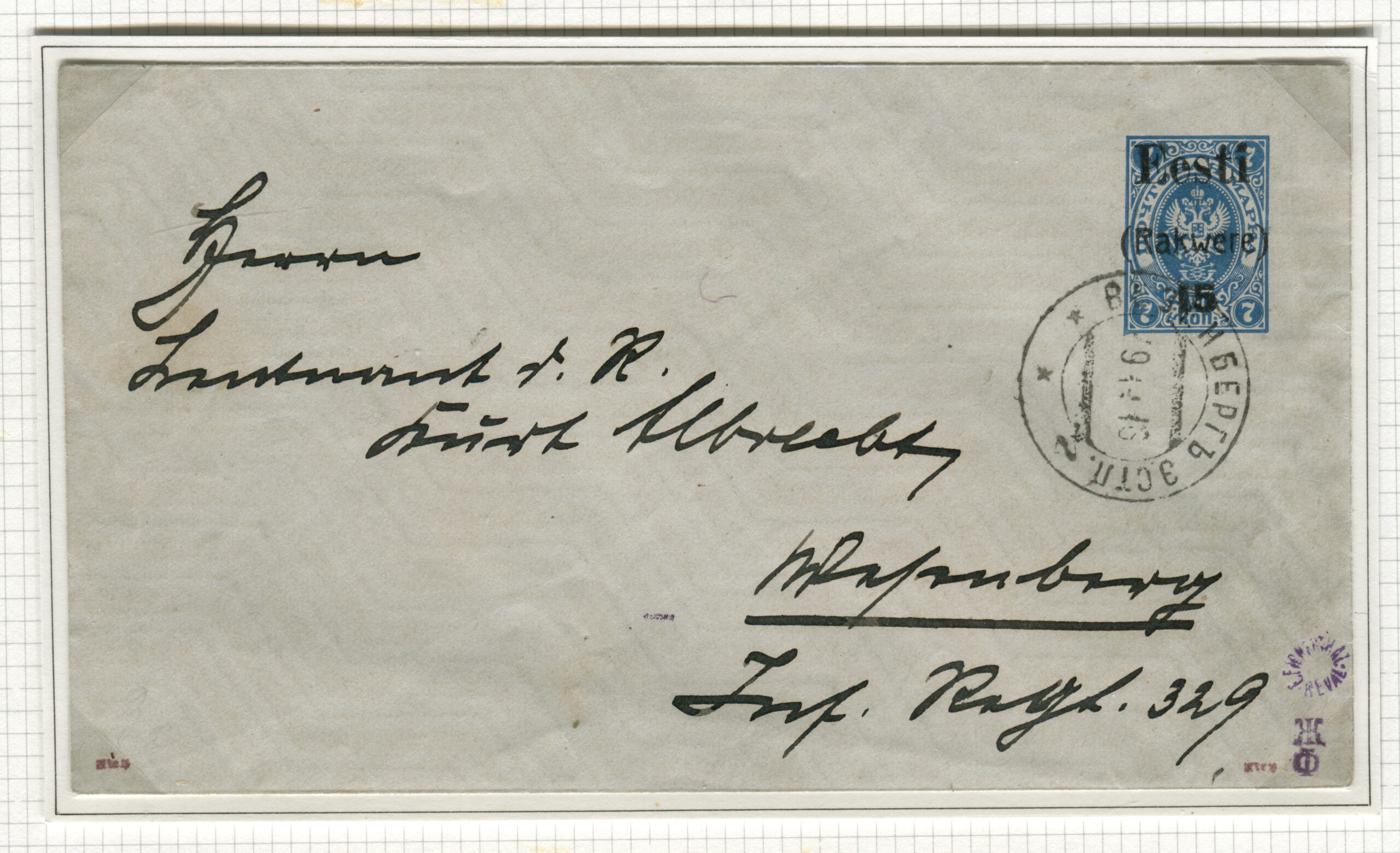
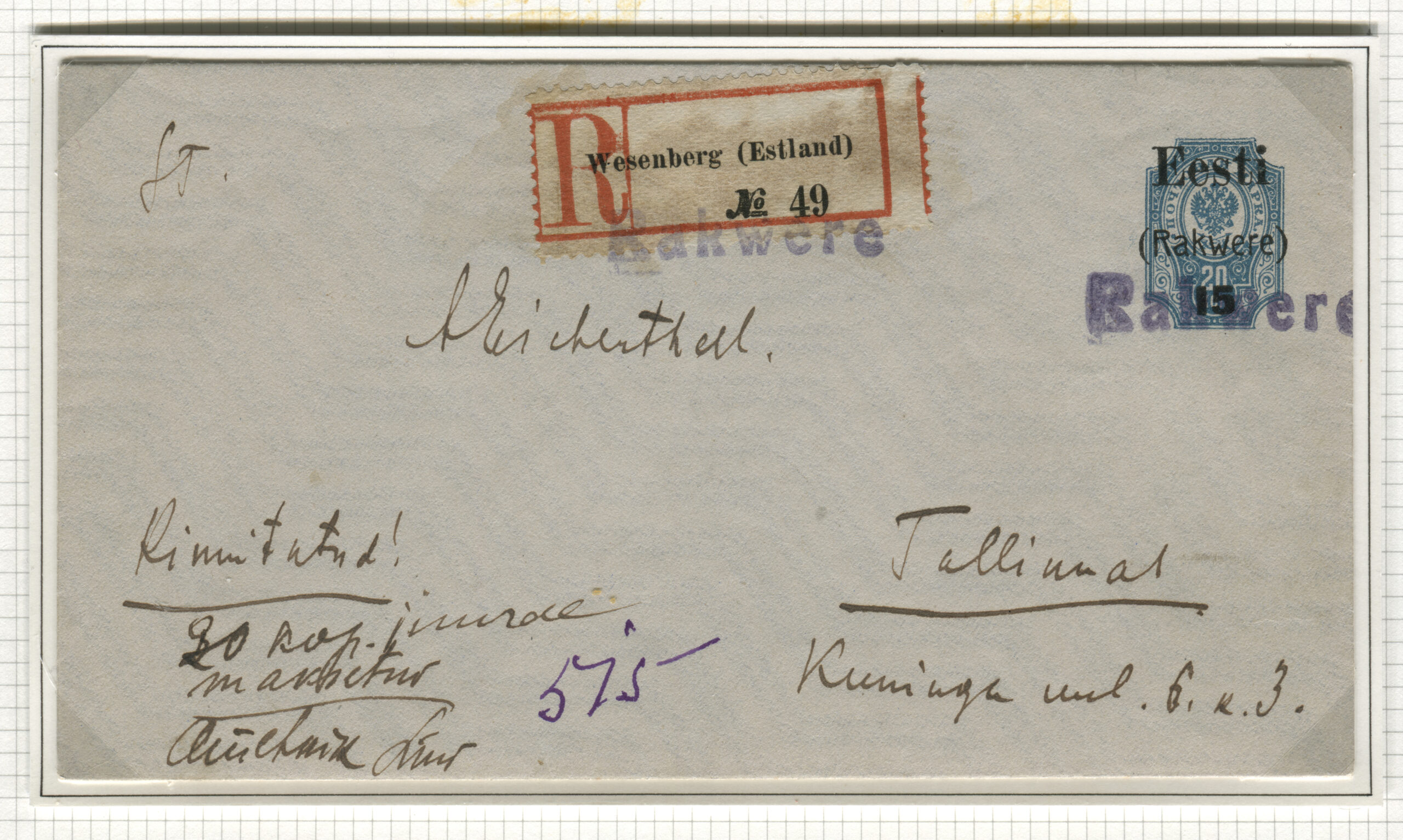
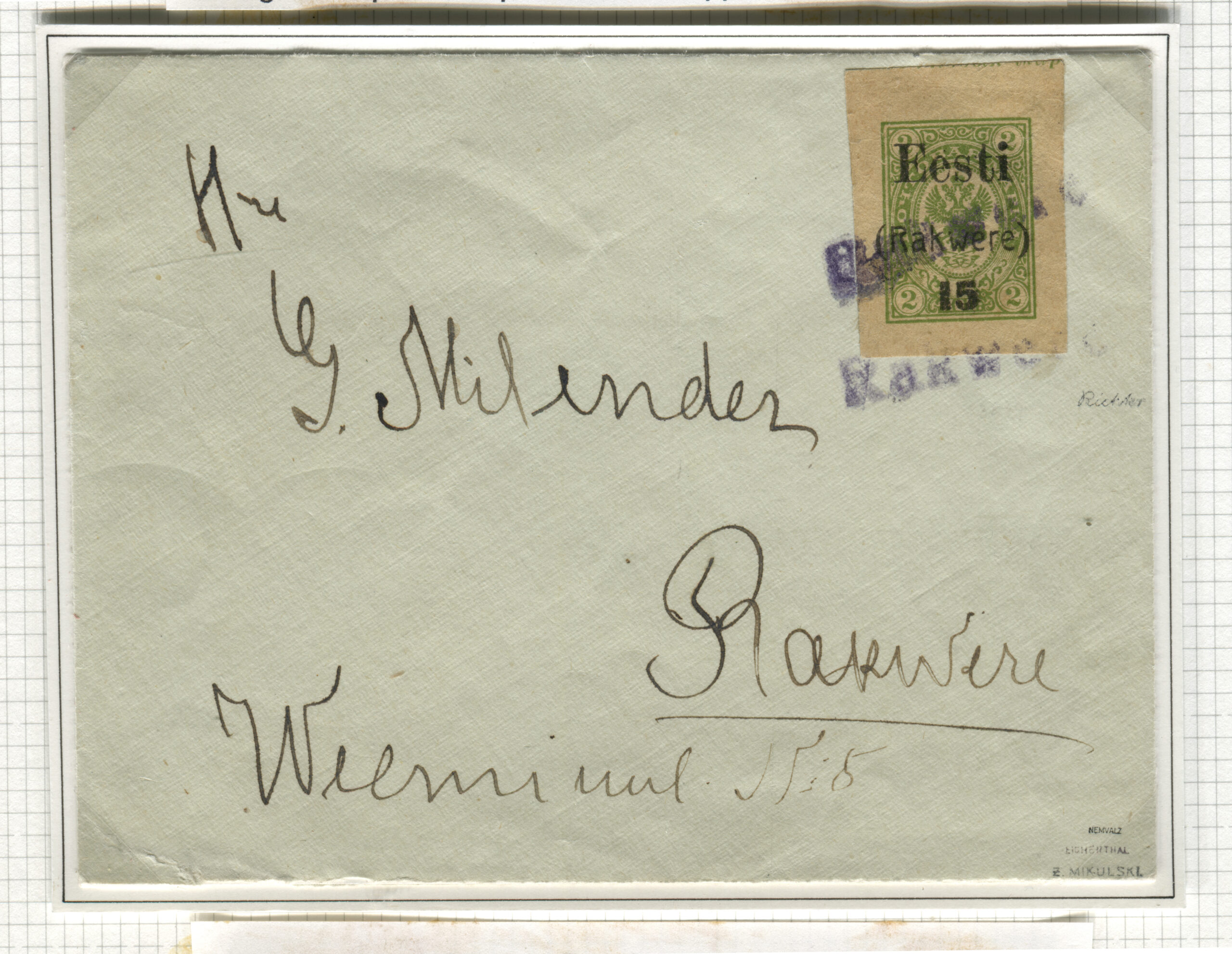
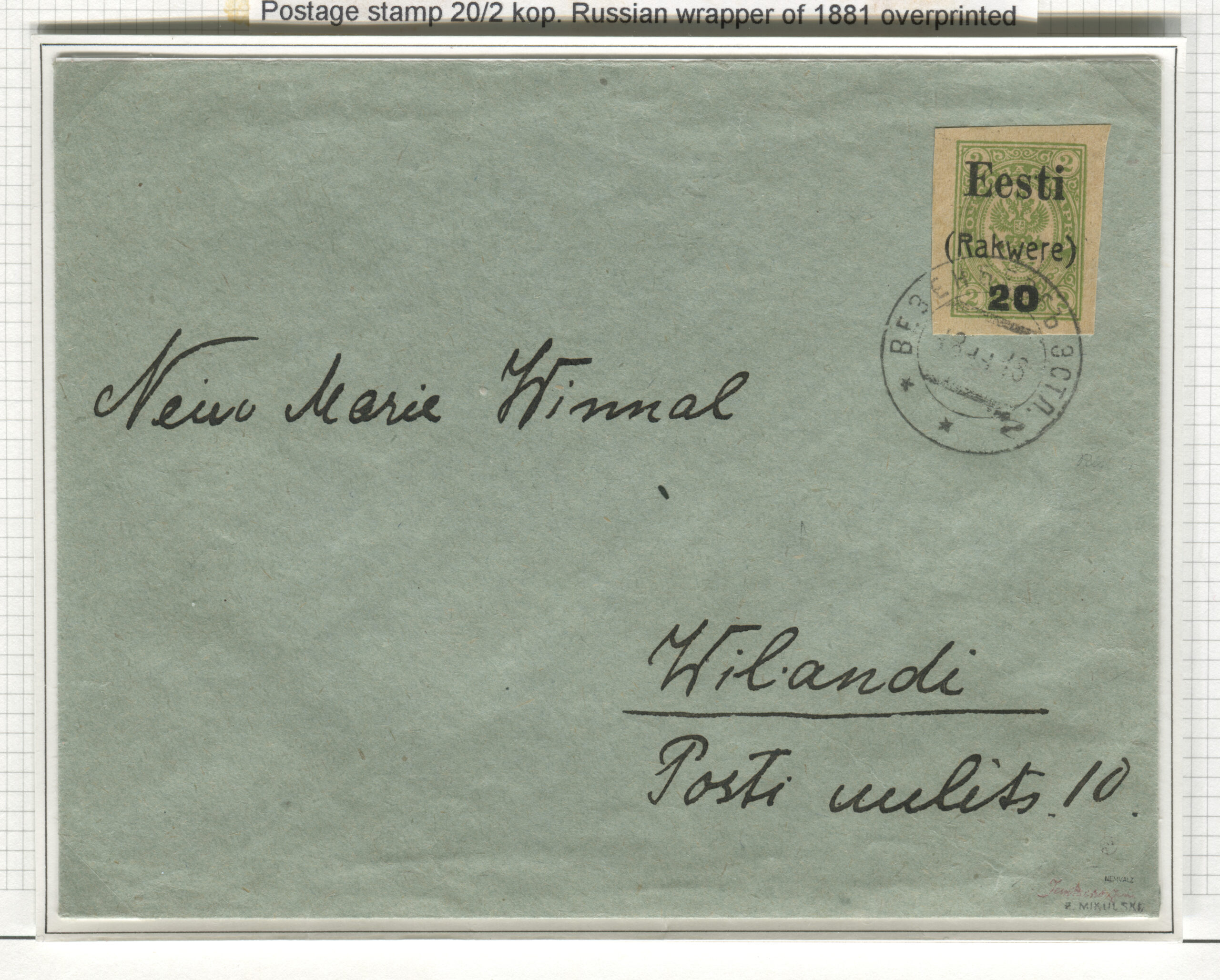
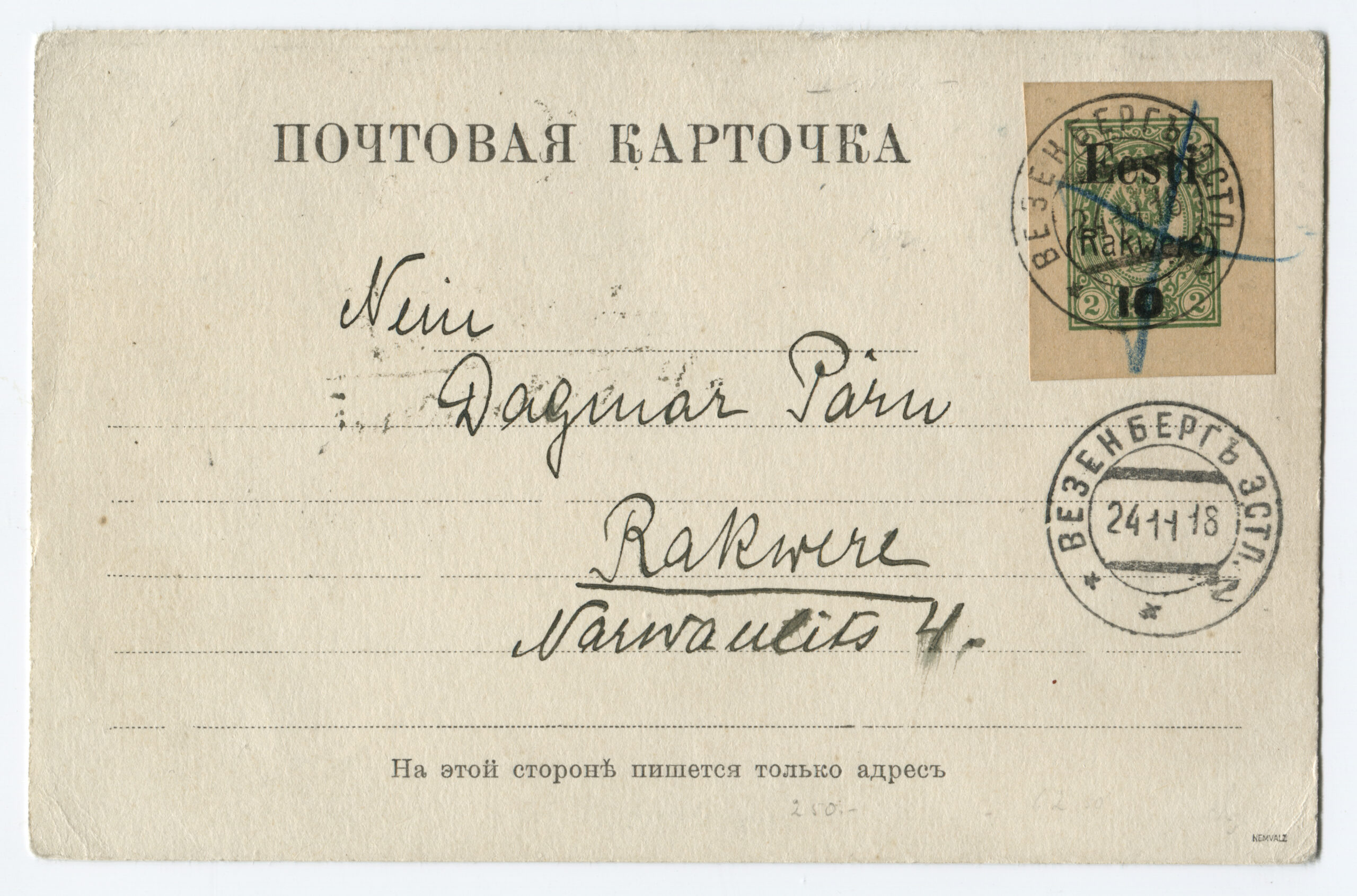
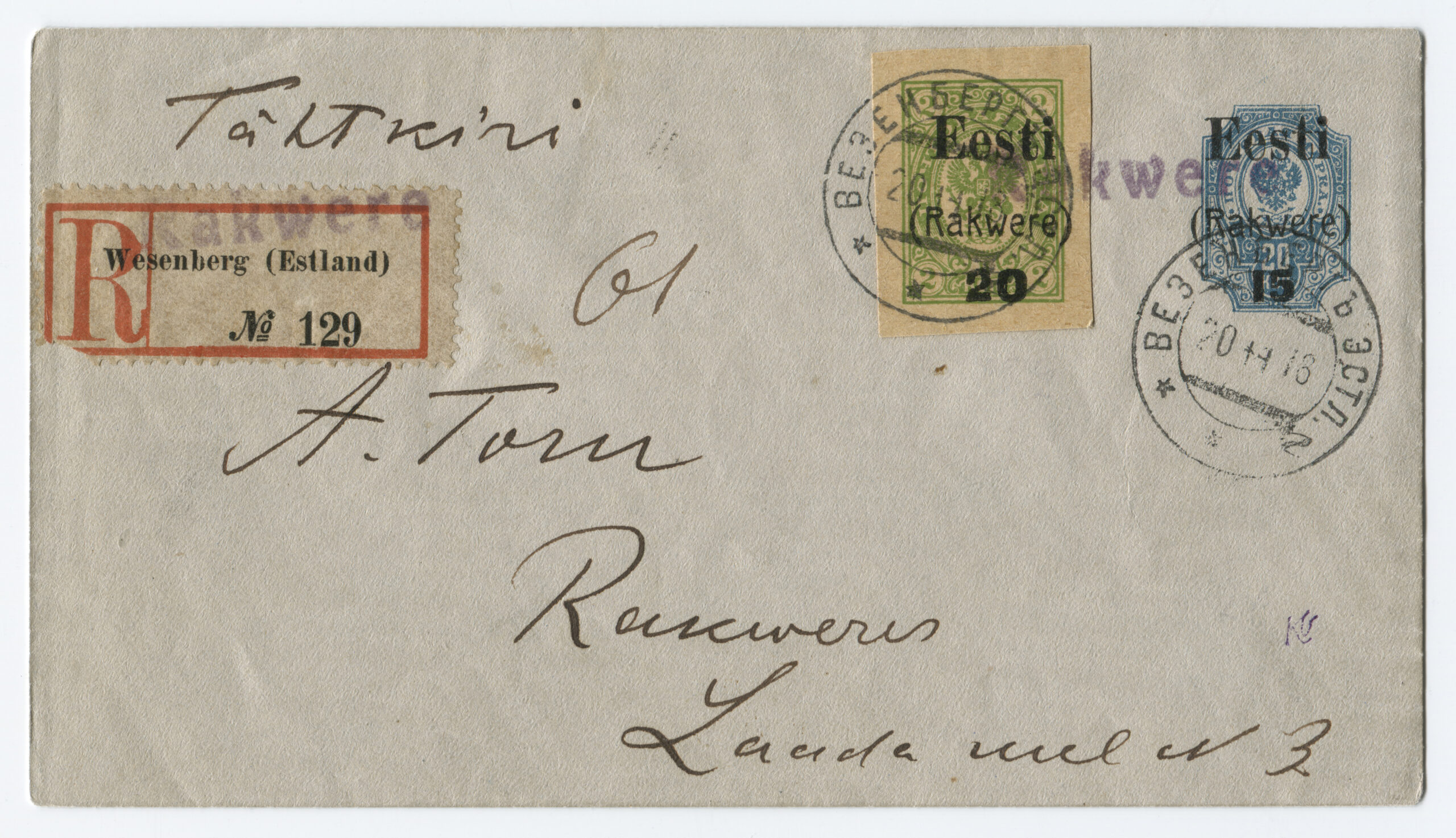
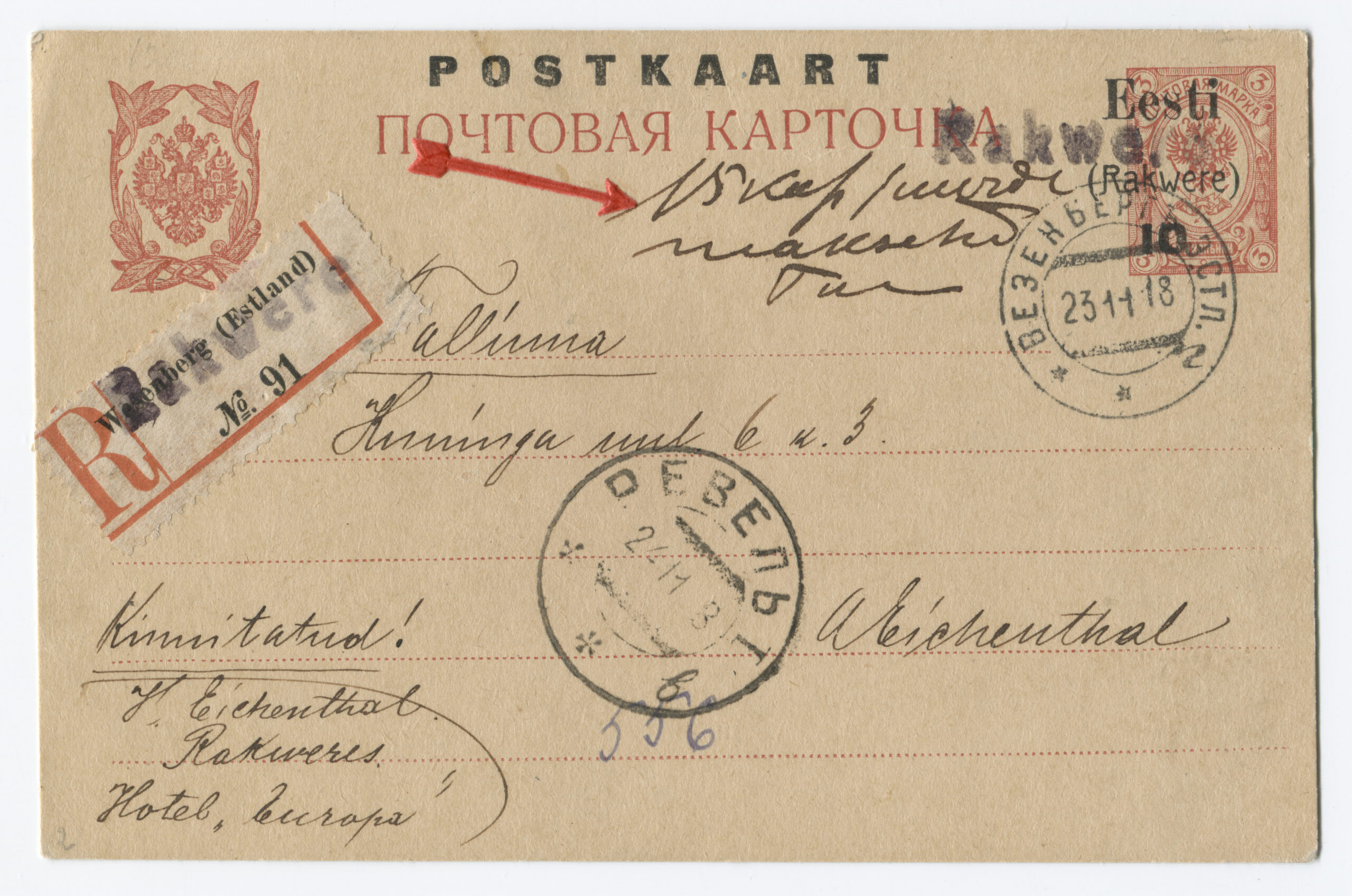
After the German occupation forces pulled out of Estonia in November 1918, the Viru County Government ordered the opening of the Rakvere post office in the former tsarist Russian post office facility, which also housed the German Ober-Ost post office.
In rooms off to one side, the director of Rakvere post office, Aleksander Torn, discovered Russian-era postal band, postcards and postal stationery with pre-printed postage. The newly founded Estonian Postal Administration (Postivalitsus) had sent orders, but it was not yet possible to obtain Estonian stamps or permission for issuing local stamps. Torn thus turned to the county government for permission to overprint the Russian-era postal band, and duly received the go-ahead.
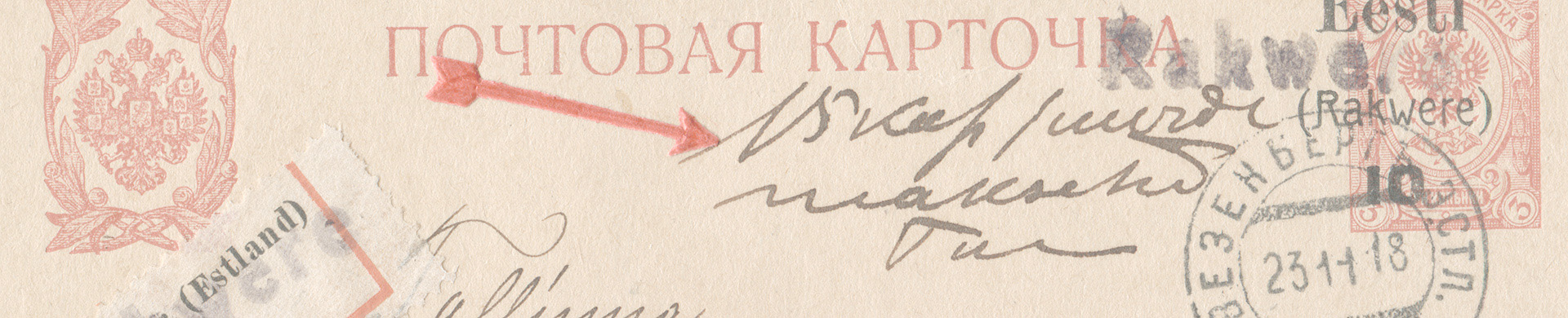
Rakvere’s Margarethe Levmann printing plant was handed the task to quickly overprint one- and two-kopeck postal band with new denominations: 10/2 kop.; quantity: 173 15/2 kop.; quantity: 402 20/2 kop.; quantity: 137 35/1 kop.; quantity: 26 The overprinting was in three rows: Eesti/ (Rakvere)/ and the new value. They were pasted as stamps on letters, postcards and other postal shipments.
Villem Eichenthal’s special catalogue entitled “Eesti“, published in 1962, records the date of issue of the “Rakvere“ stamp as 16 November 1918 and the last day of validity as 27 November 1918. Some letters and stamps were postmarked later, however – either because a postal official was inattentive or perhaps as a personal favour.
Like most local issues, the Rakvere stamps are not free of speculation. They became sought after by philatelists and their prices rose quickly. The Estonian Postal Administration did not recognize the Rakvere stamps by official directive but rather solely made a note of their issue. The Rakvere stamps are a local issue and they have been noted as such in major postal stamp catalogues.
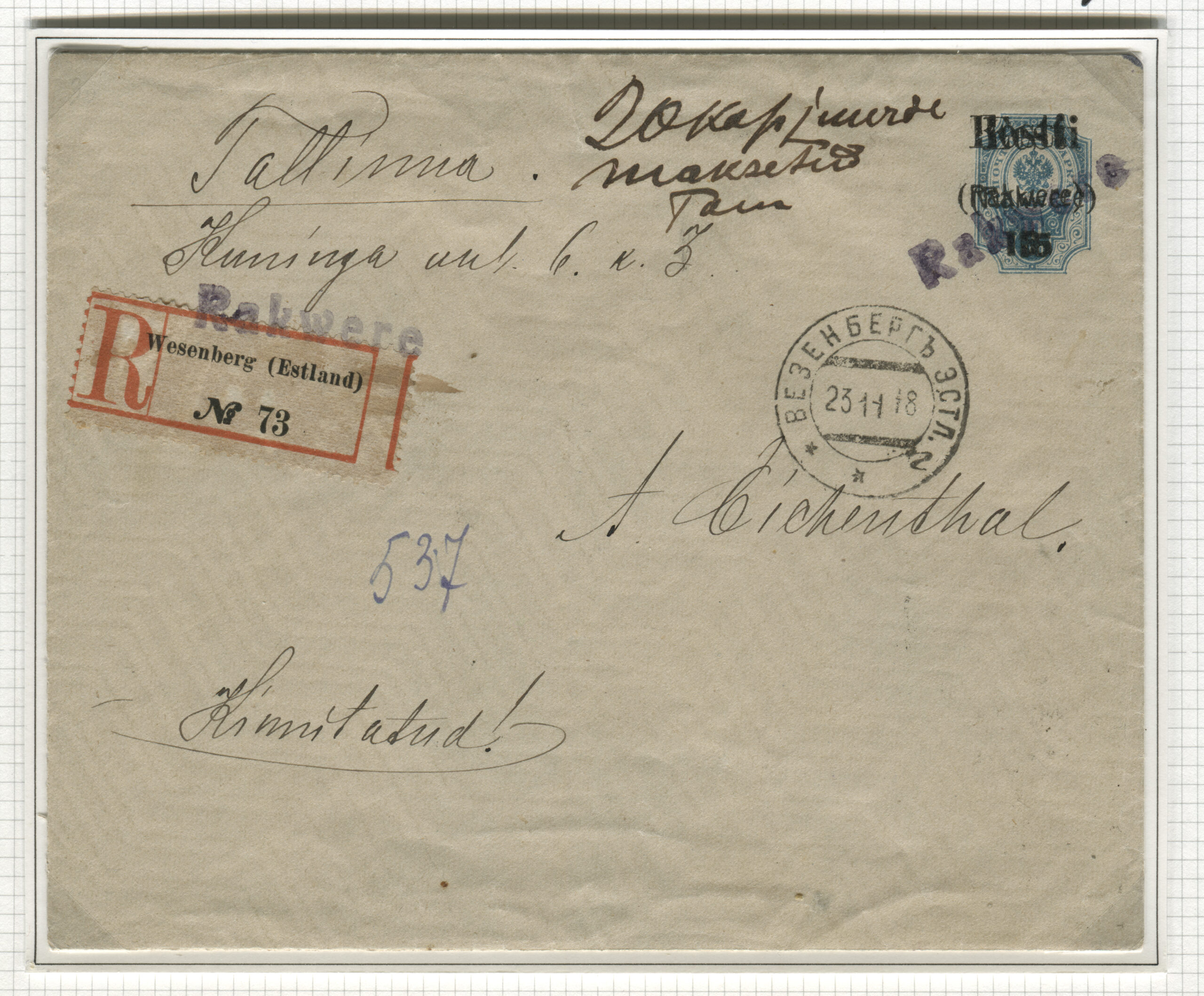
Besides postal band, former Russian postal stationery was also overprinted. Eleven different types of postal stationery were printed. Of these, two postcards (10/3 kop. and 10/5 kop.) and one type of franked envelope (15/7 kop.) was overprinted with two rows of text at Nikolai Erna’s printing plant: EESTI / new value (either 10 or 15 kop.).
Similarly to the three-row overprint of the Rakvere stamps, the Margarethe Levmann printing plant overprinted two types of postcards (10/3 and 10/5 kop.) and six special types of franked envelopes (15/7, 15/15/7, 15710, 15/14, 15/20 and 15/20 kop.).
In Eesti Filatelist (Estonian Philatelist) issue no. 10 (1965), Heldur Alver writes: “The Rakvere stamps are very rare.”
We hope you enjoy the exhibition!
Click the information button on the toolbar to access background information on postal and general history.
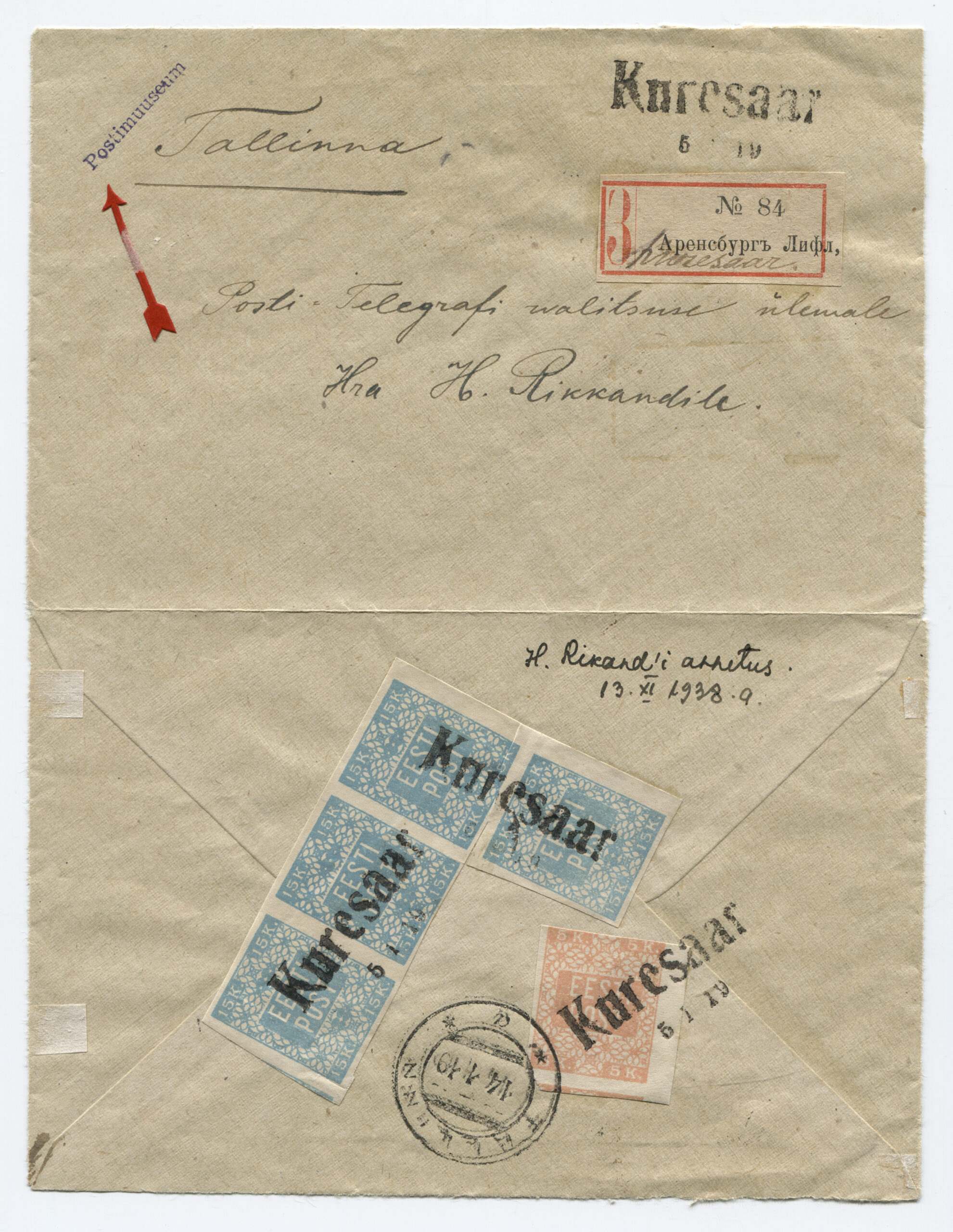
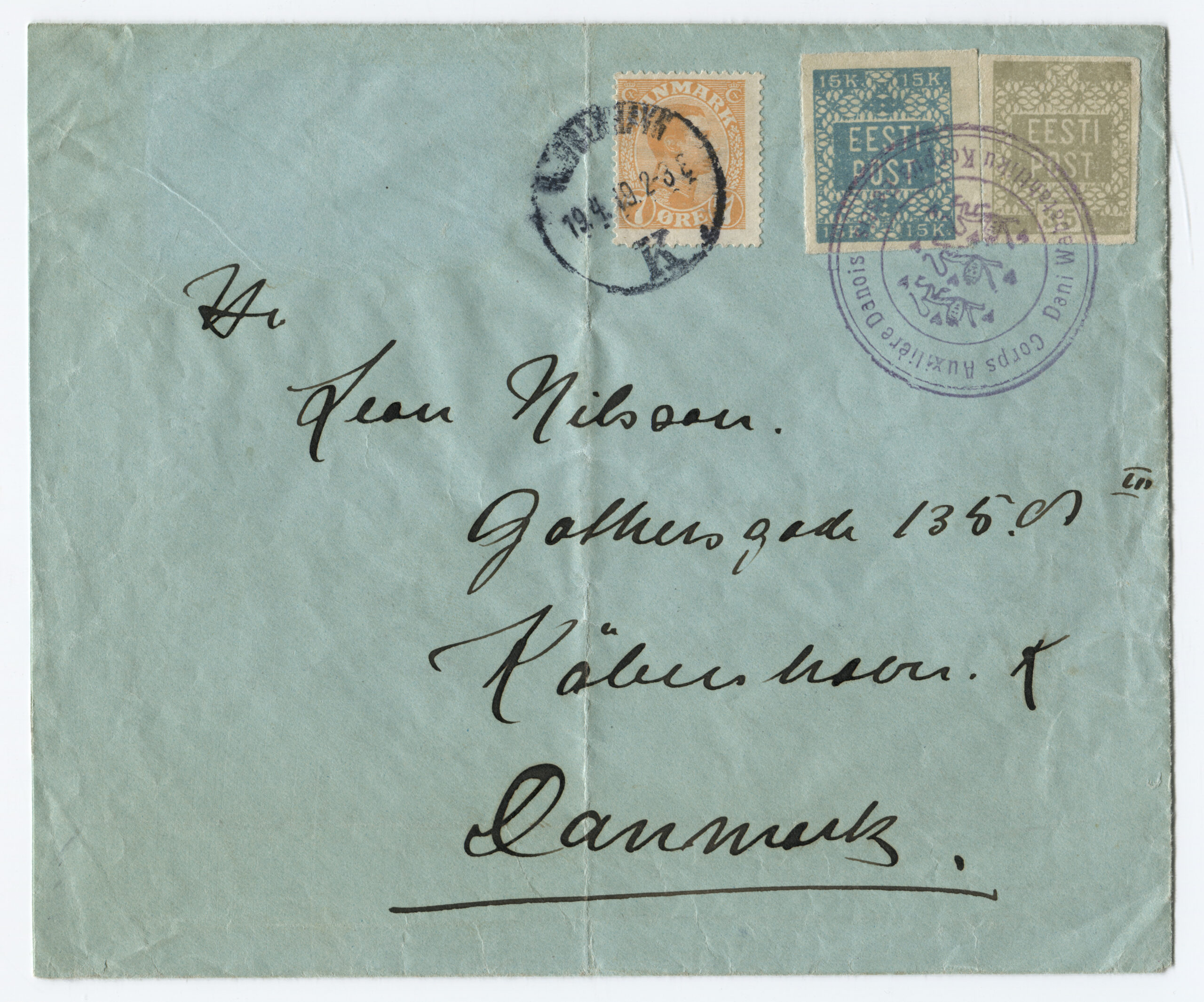
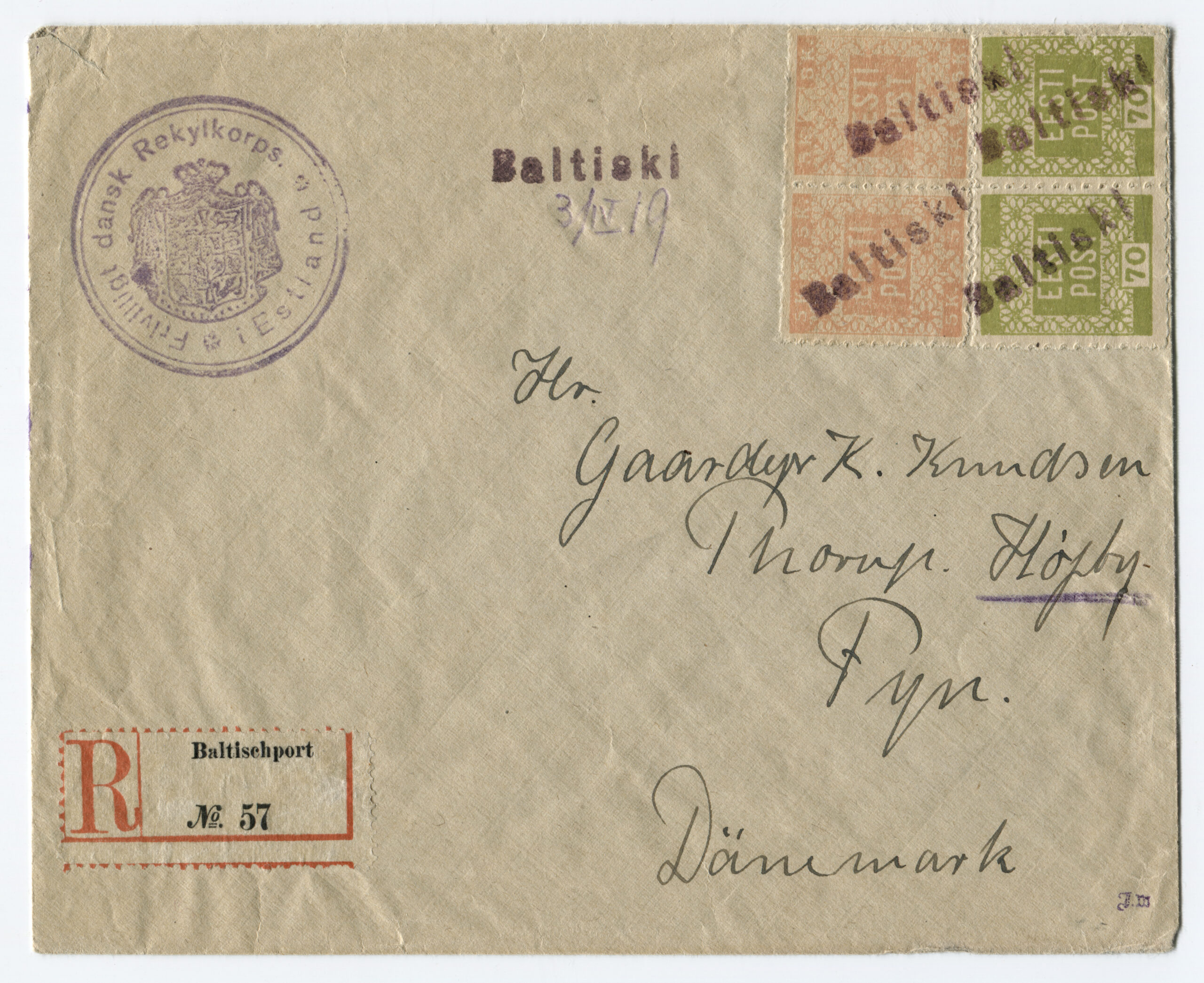
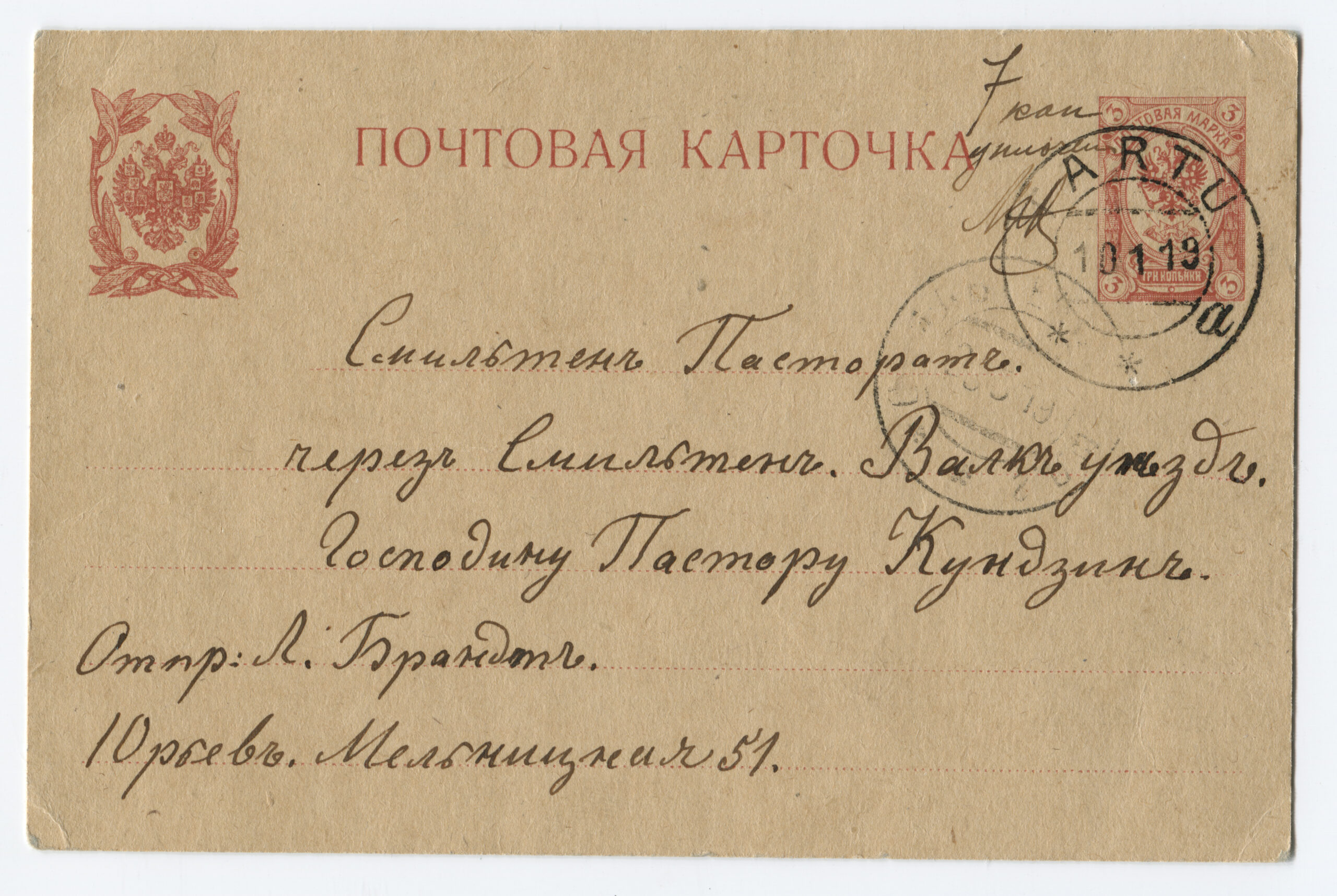
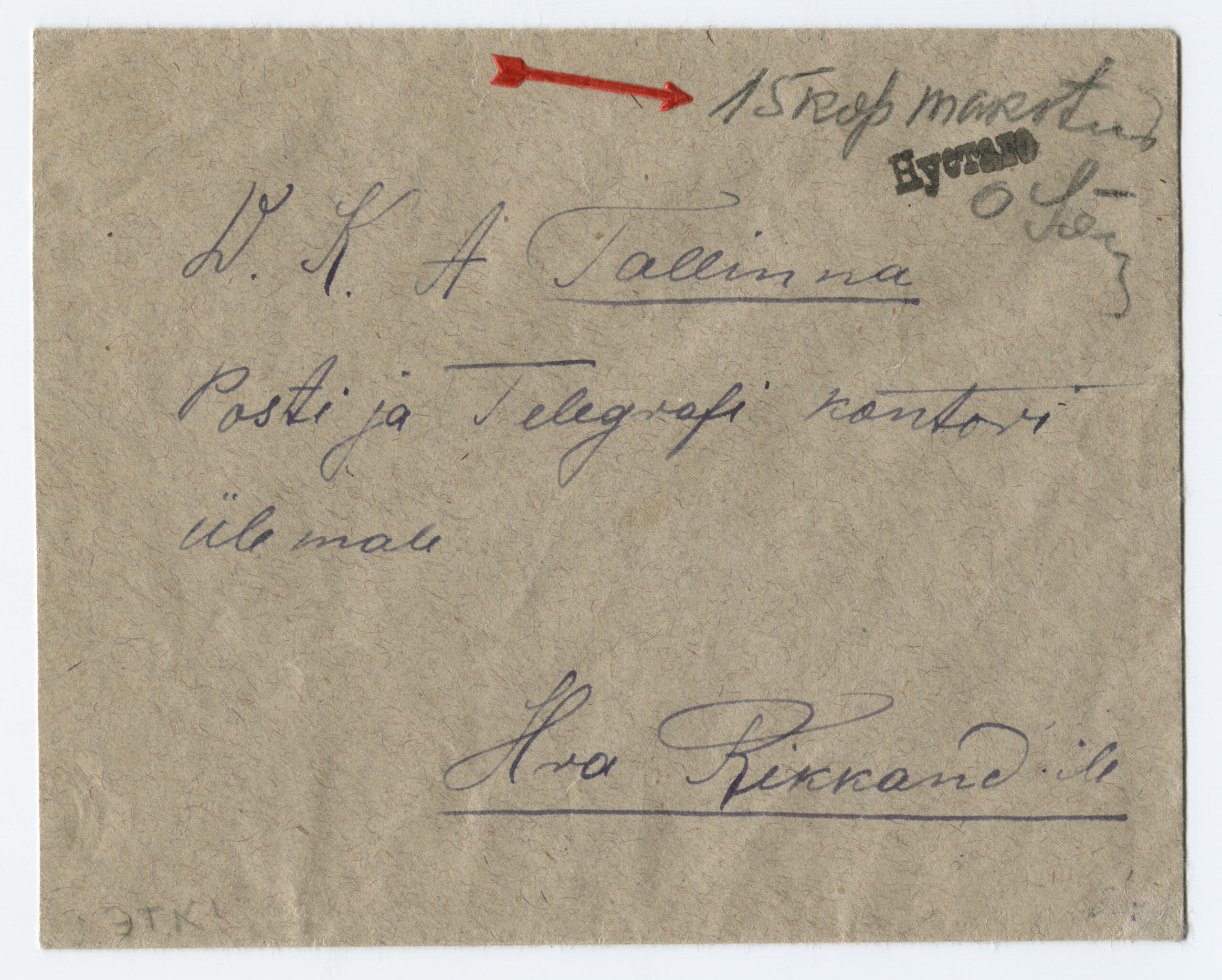
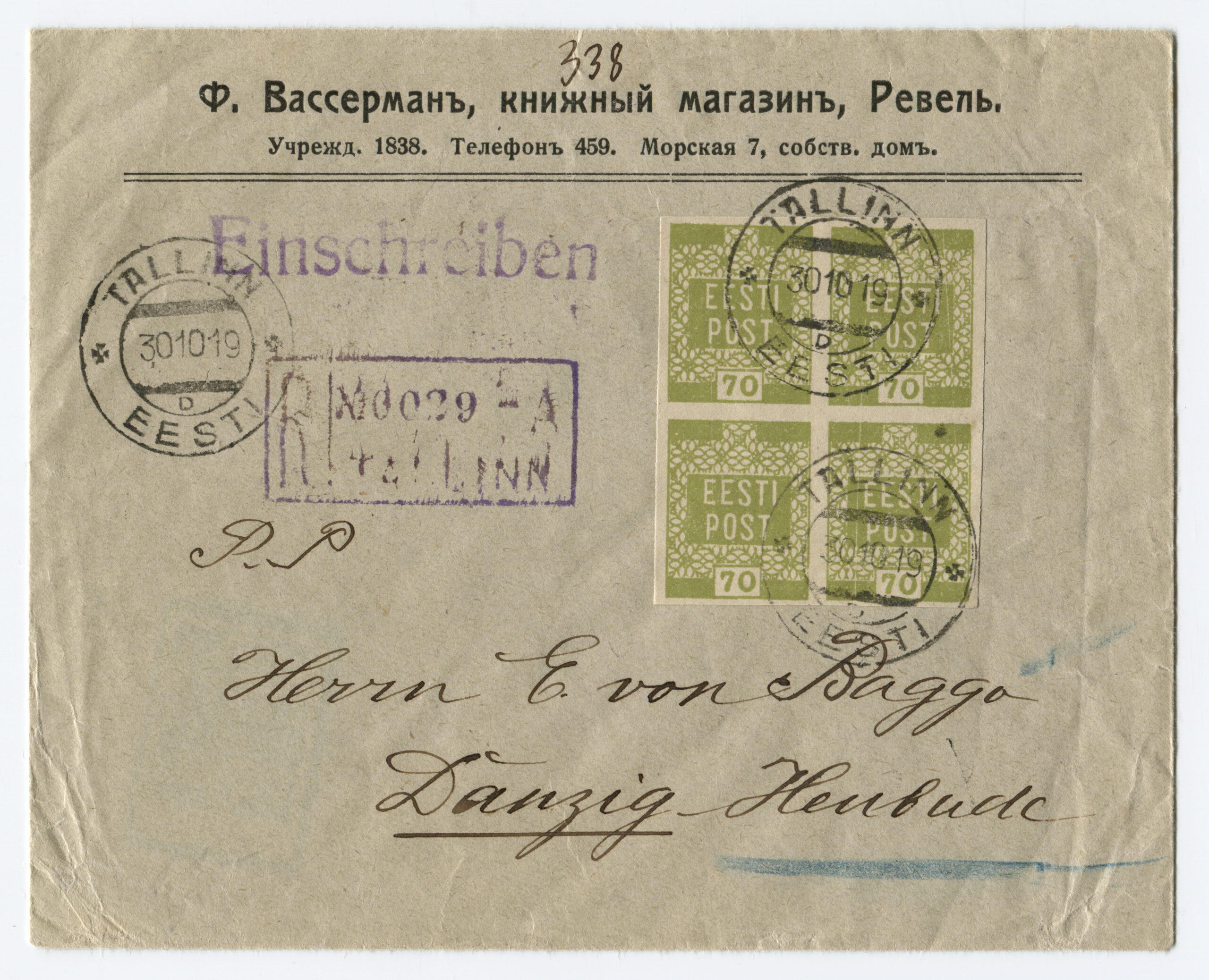
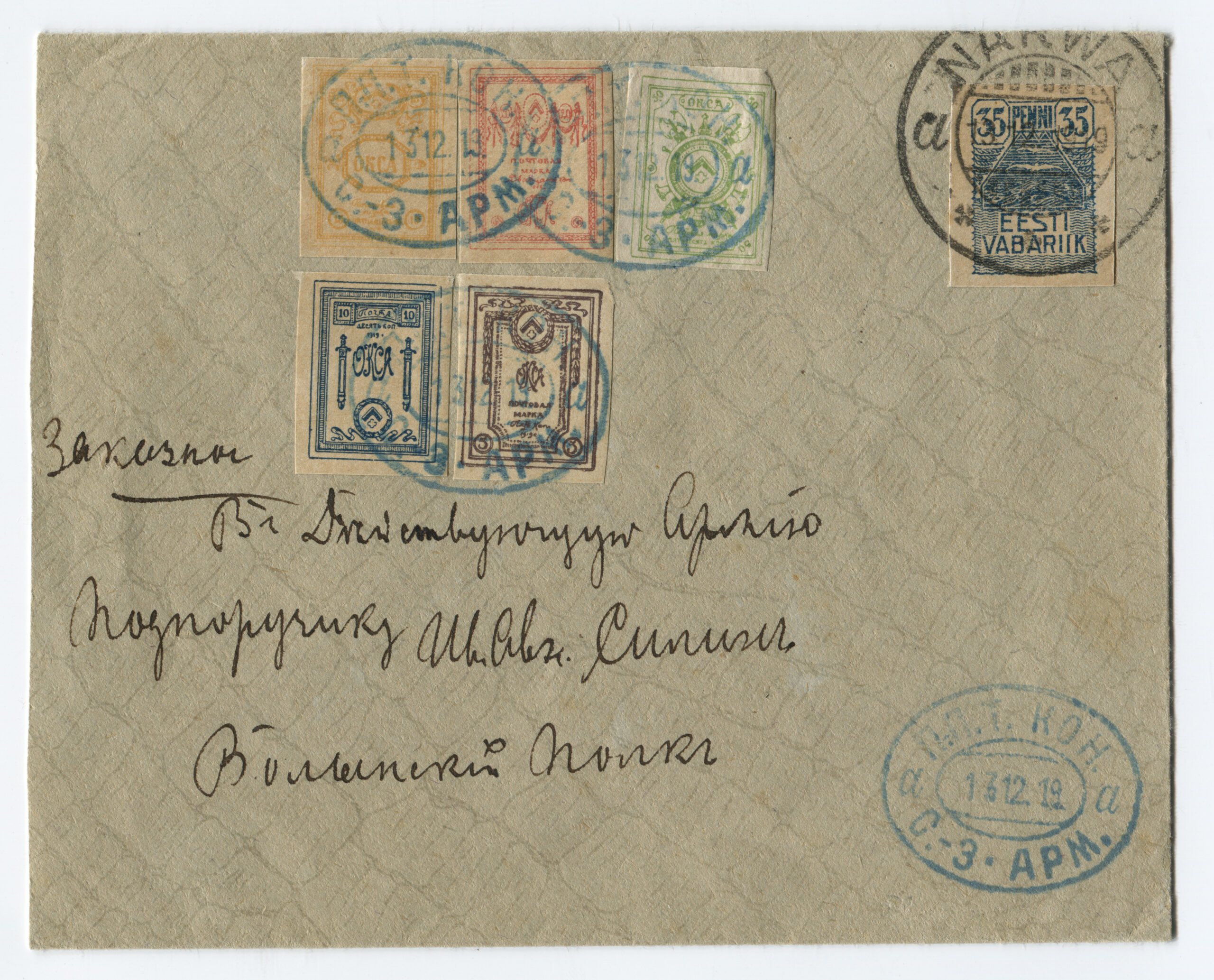
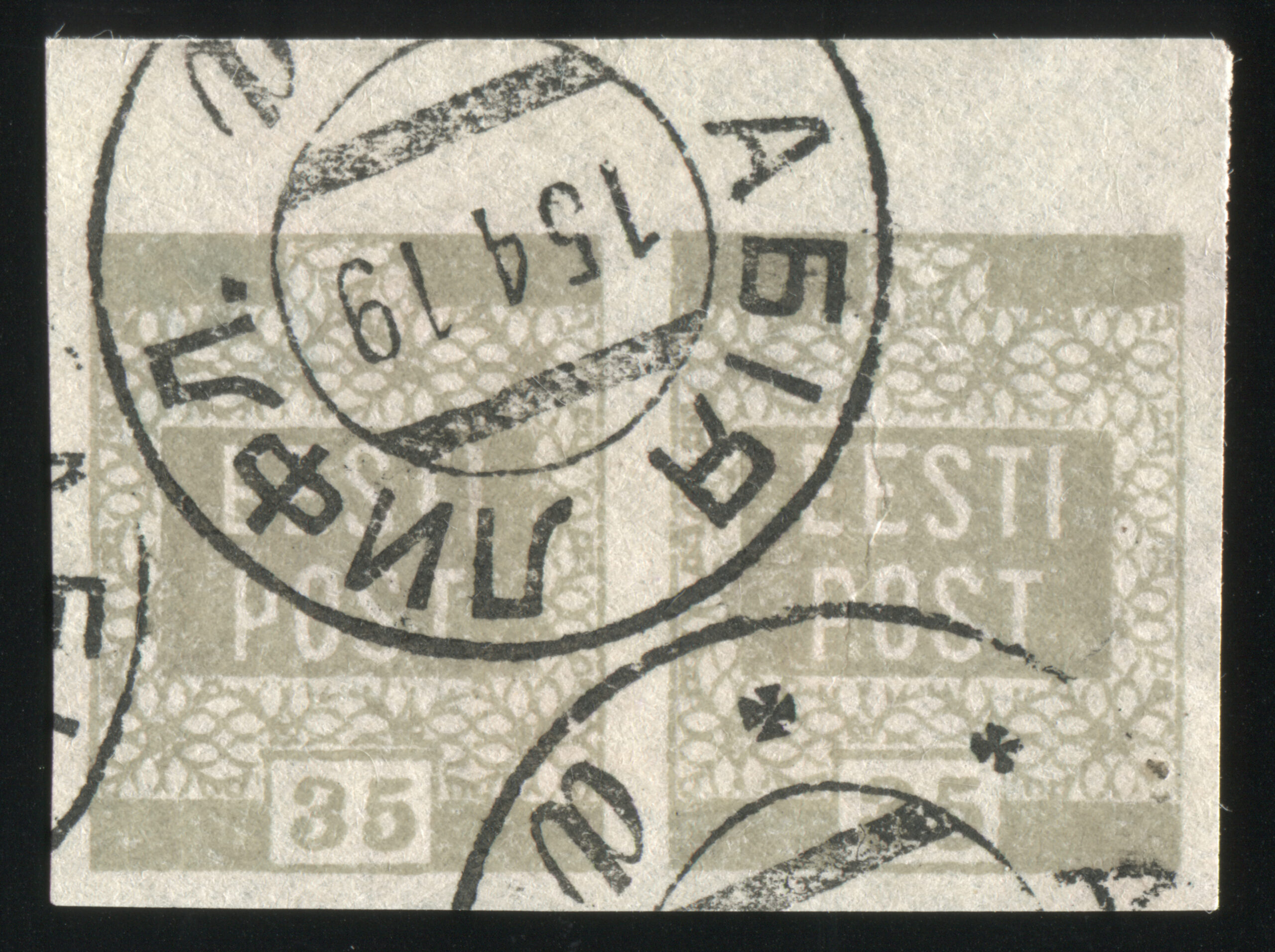
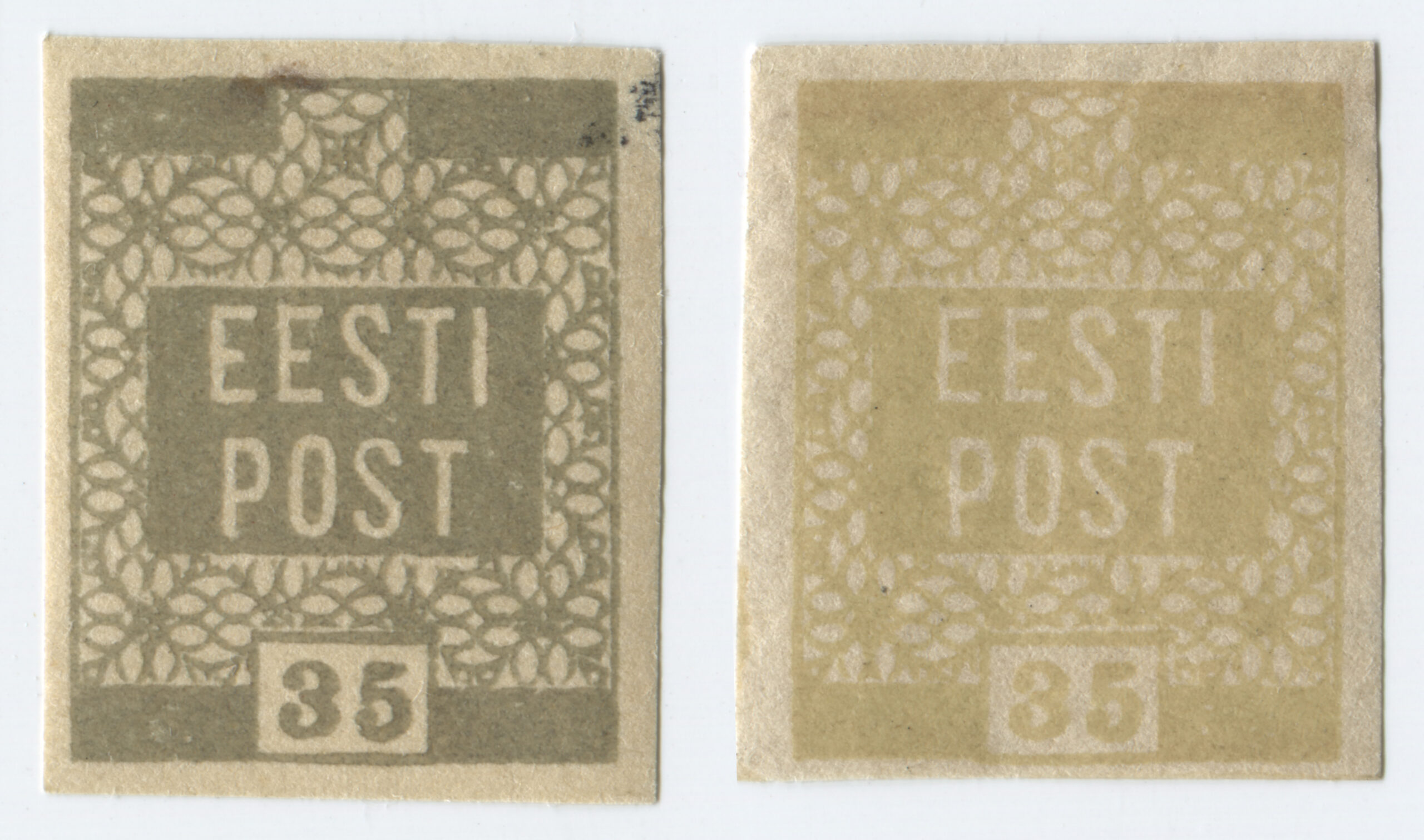
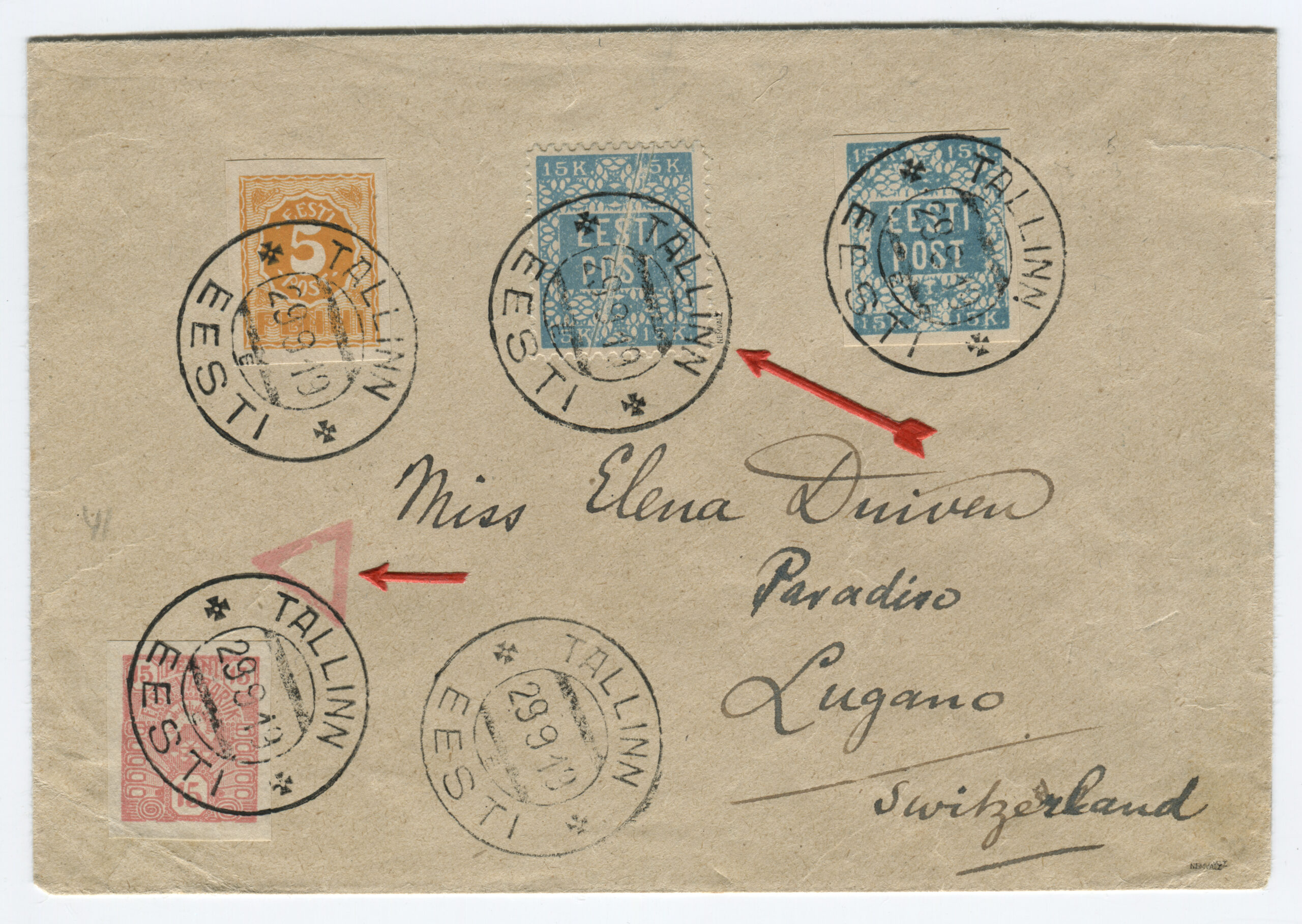
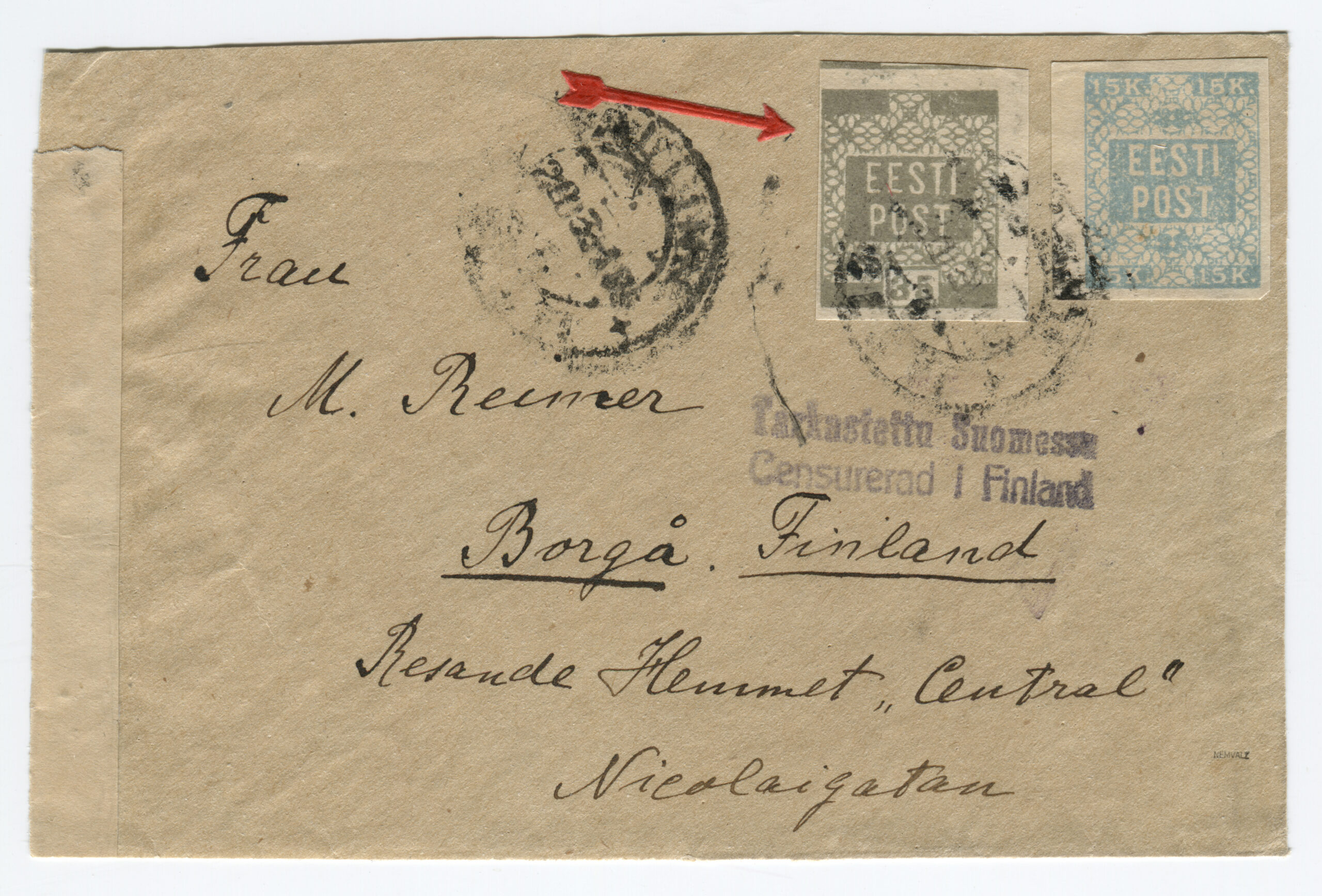
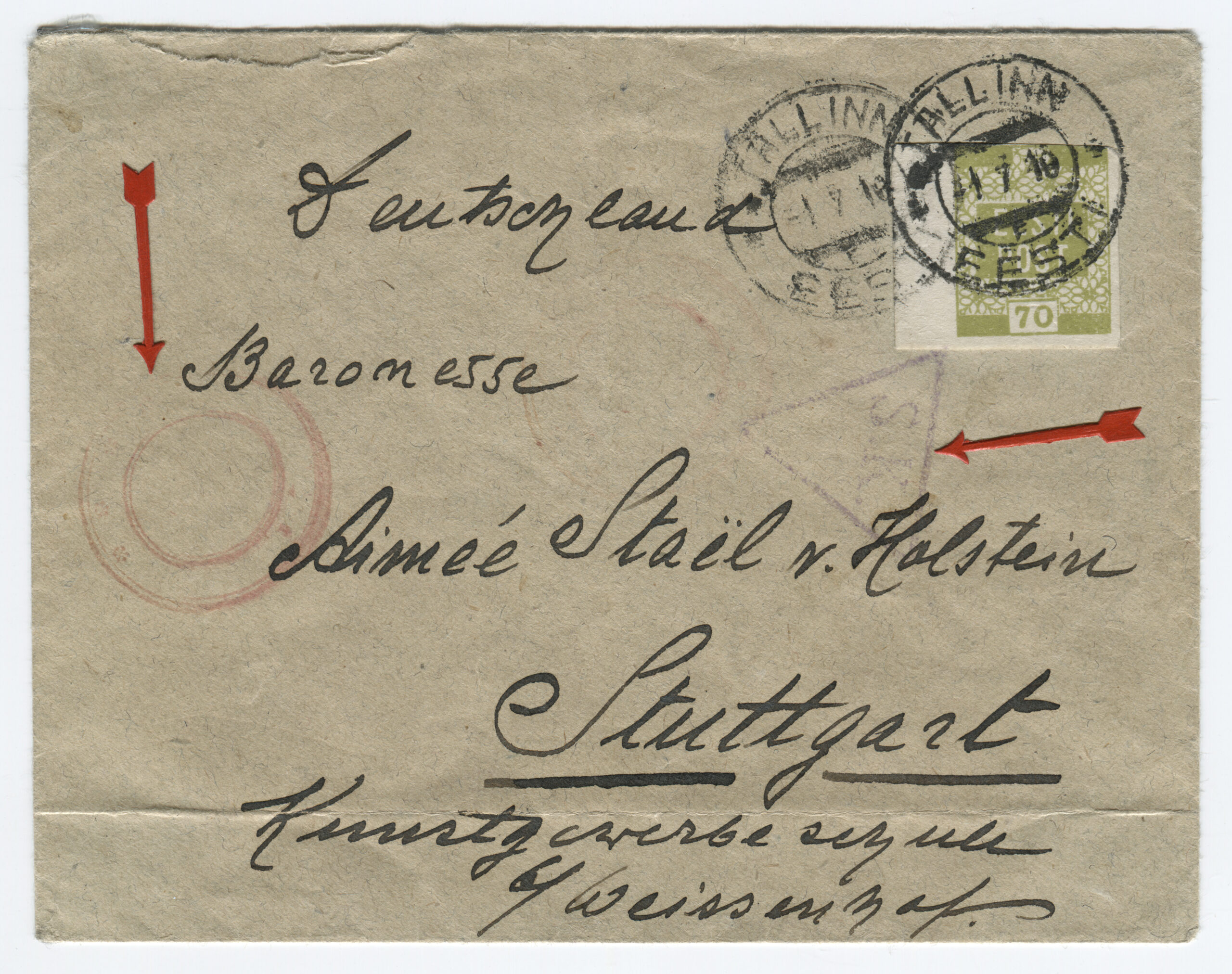
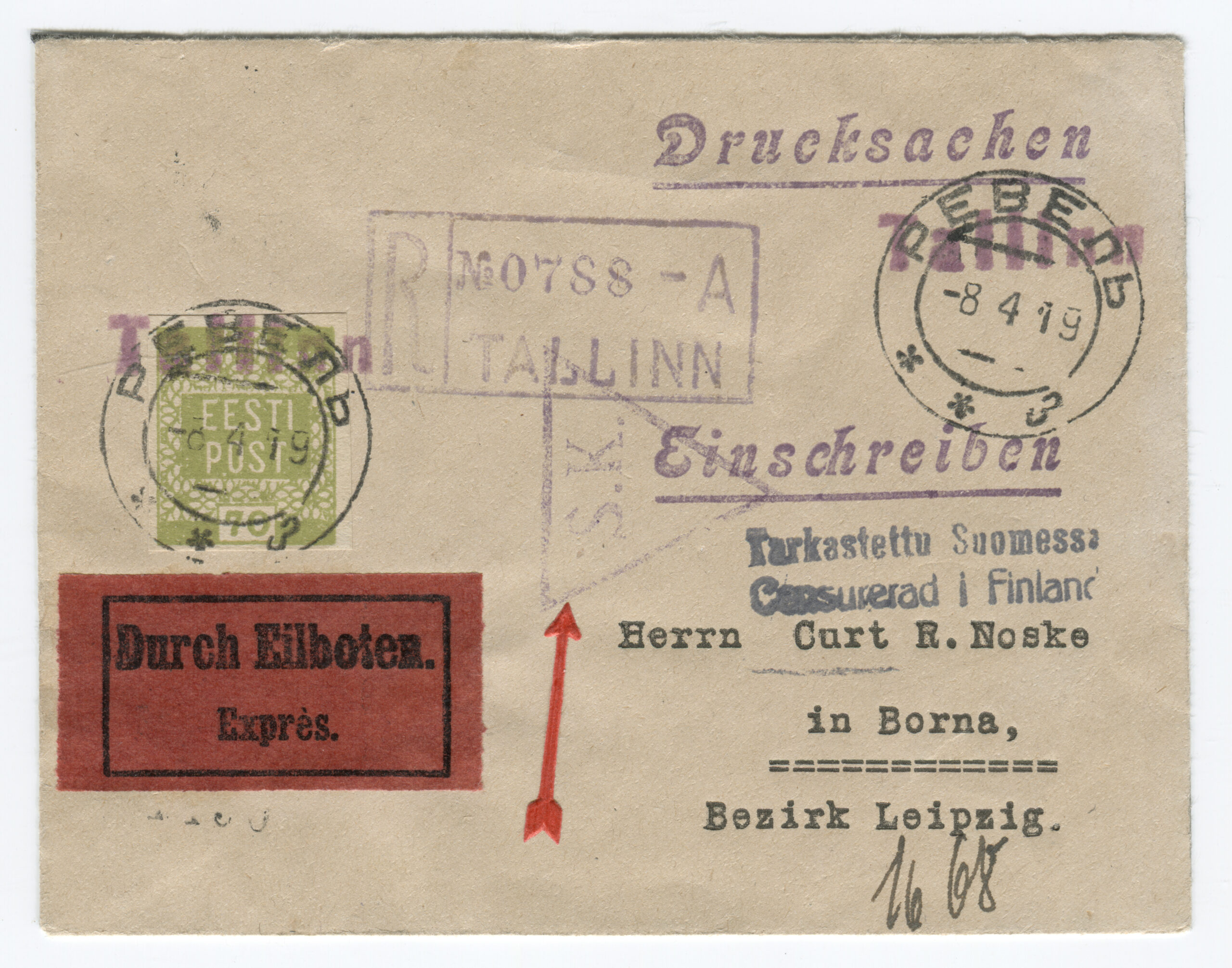
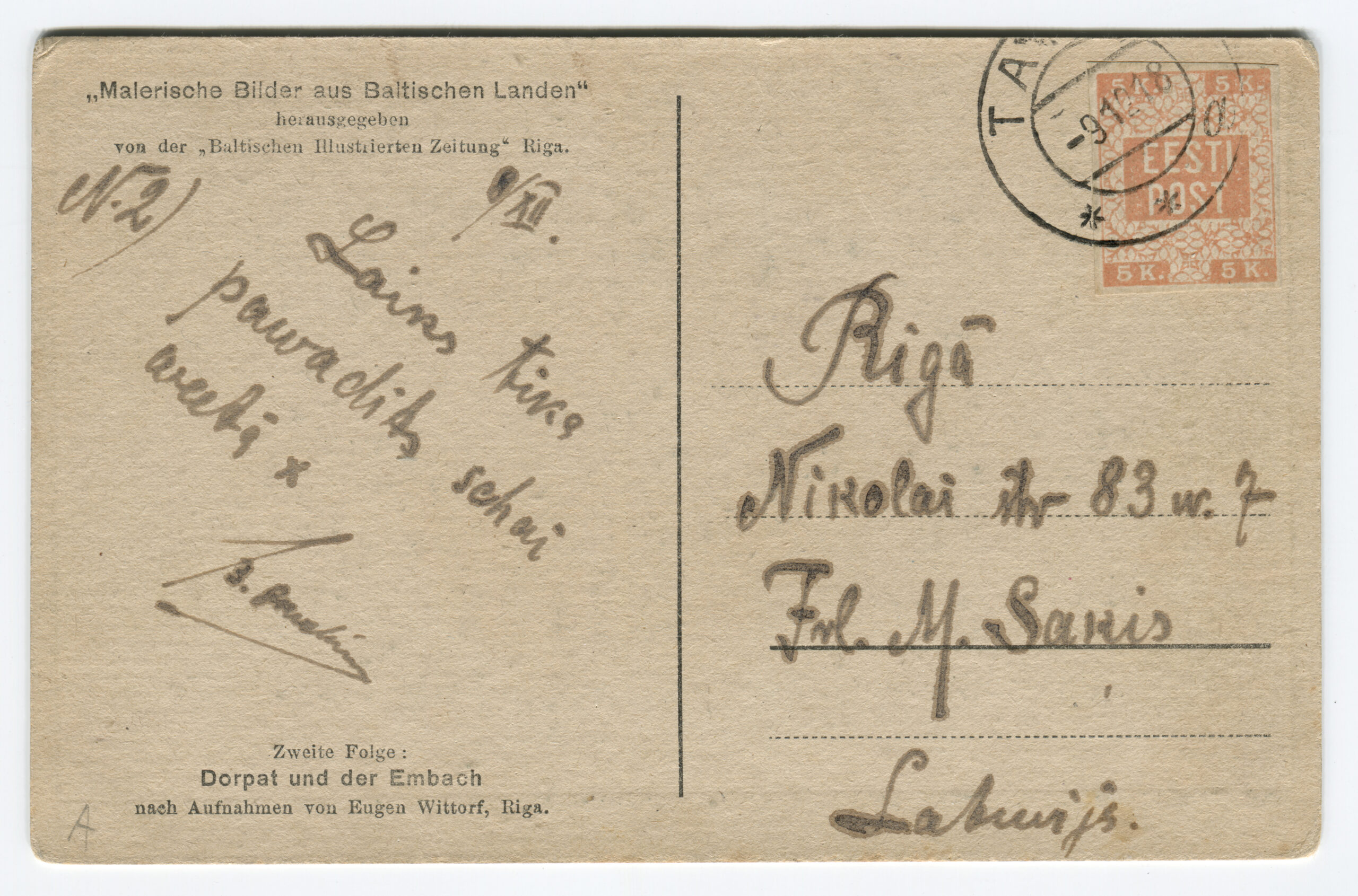
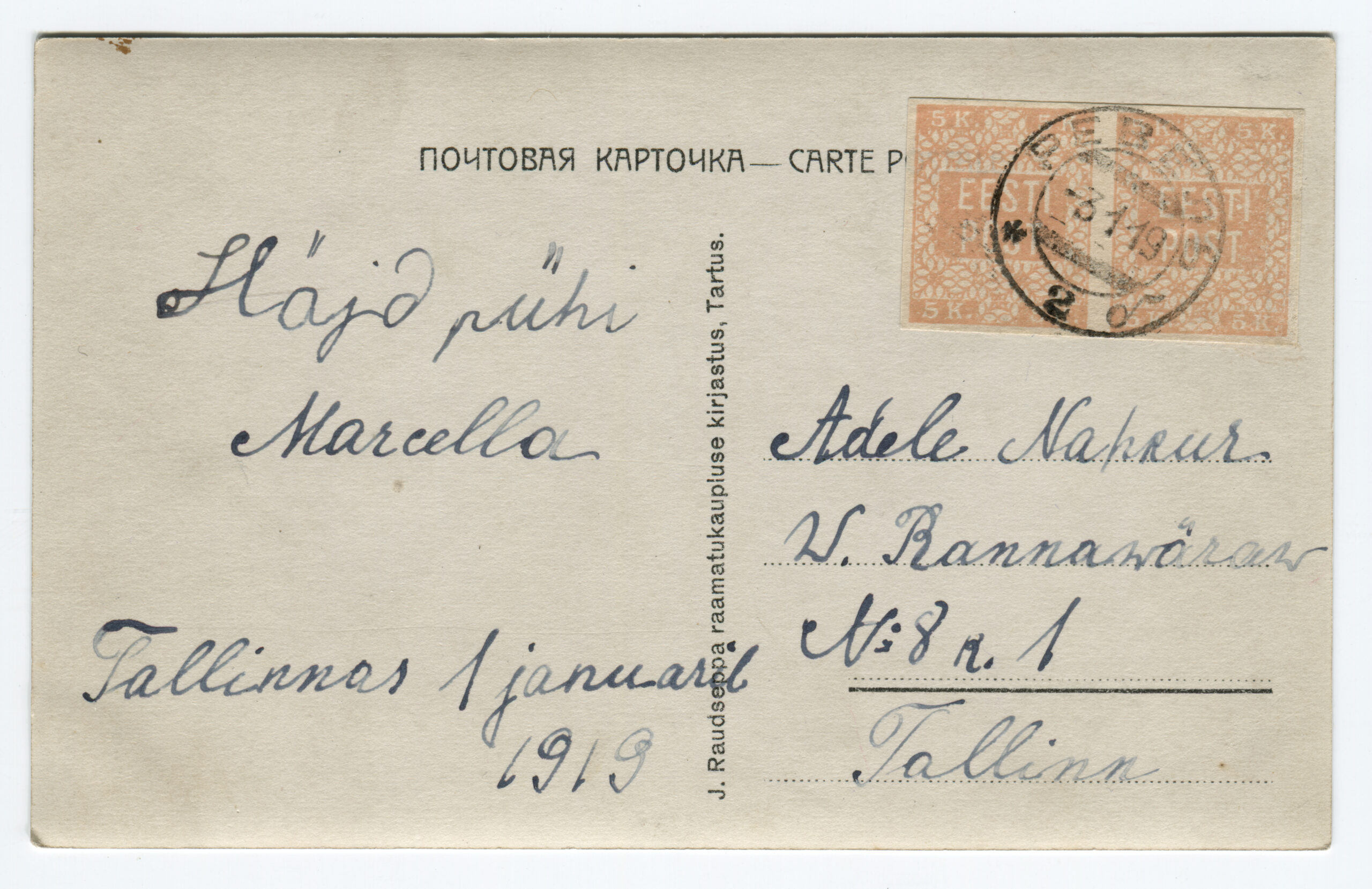
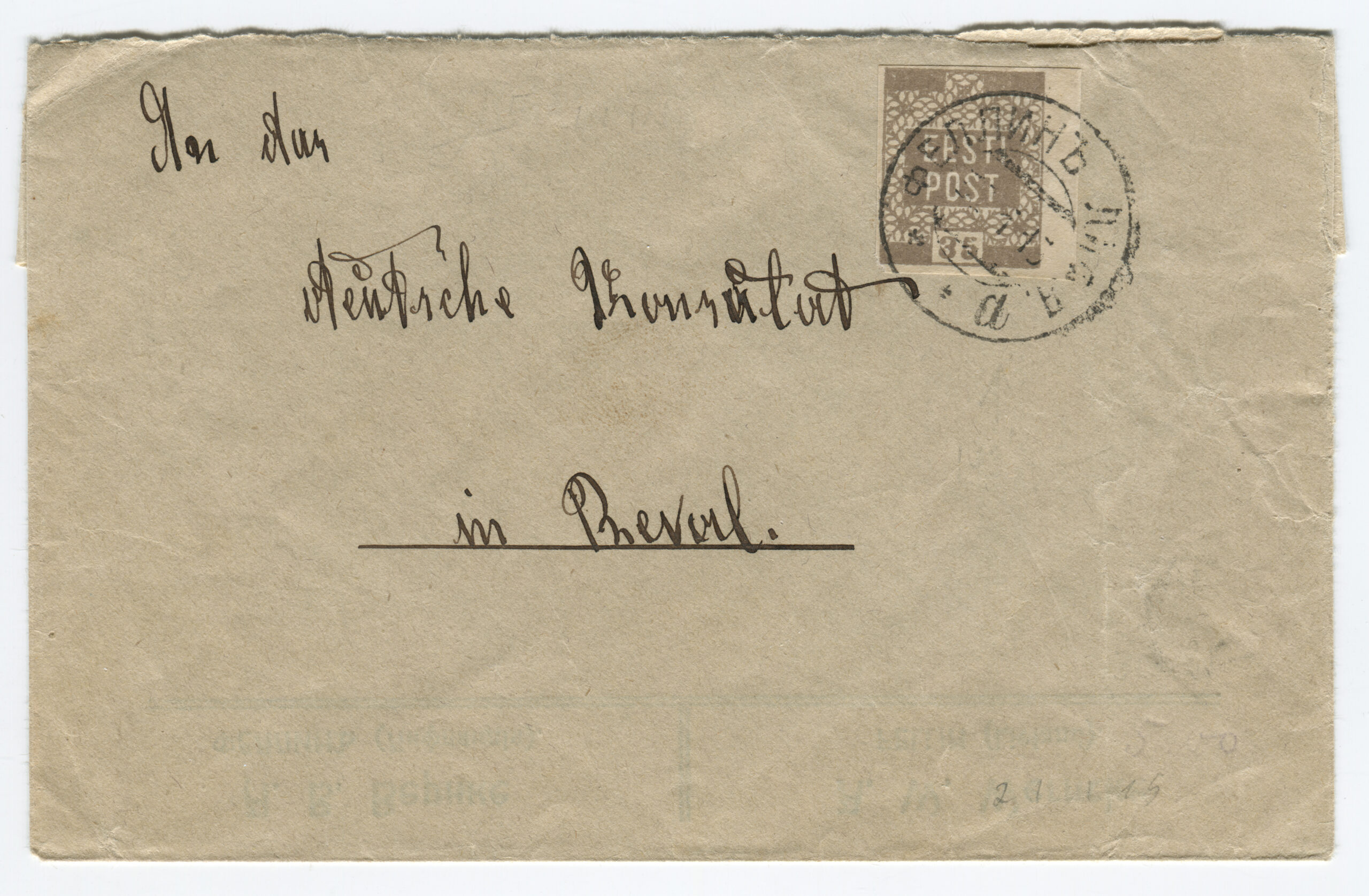
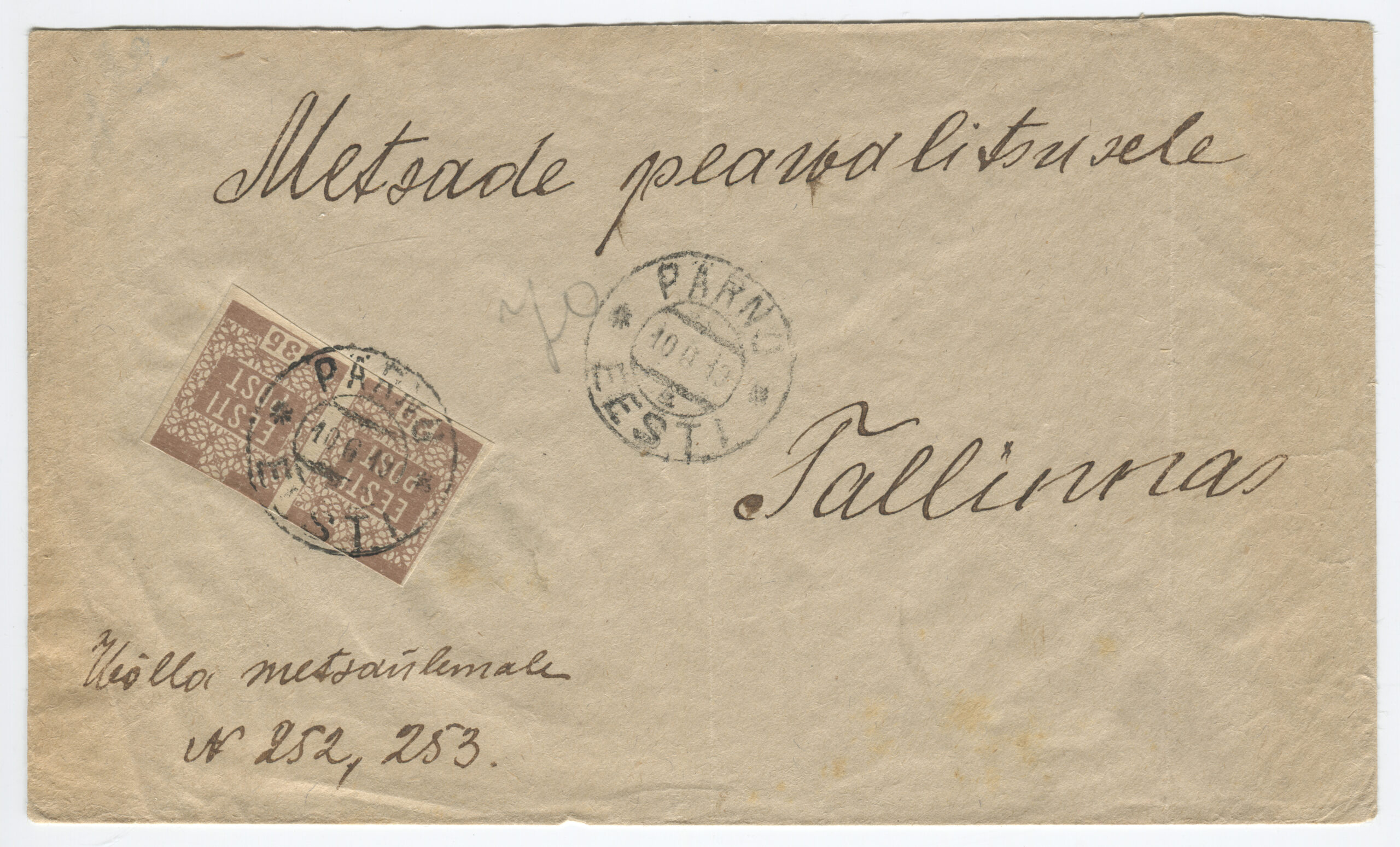
Exhibition team Compiler: Eve Aab Consultant: Ants Linnard, chairman of the Friends of the Postal Museum Society Photography: Arp Karm Editor: Ivi Tammaru Works used: Eesti Filatelist no. 11, 1970. Stockholm. Eesti Filatelist no. 3, 1957. New York. Eesti Filatelist no. 4, 1958. New York. Estonian postage stamps and postal stationery. Catalogue 2008.Tallinn: philately committee of the Estonian Heritage Conservation Society, 2008. Hurt, Vambola; Elmar Ojaste. Eesti. Estonia. Philately & postal history handbook. Catalogue. Stockholm, New York: Estonian Philatelic Society, 1986.Letter sent from Kuressaare (5 January 1919) to Hindrek Rikand in Tallinn (14 January 1919). Rikand donated the letter to the Postal Museum in 1938. (Estonian National Museum)Registered letter (R-letter) from 23 November 1918. Local overprint of a piece of Russian postal stationery (Rakwere) and 15/20 kop. The surcharge for registered post – 20 kopecks – is handwritten. Letter sent to A. Eichenthal. (Estonian National Museum)A letter home sent bearing a 19 April 1919 postmark of the Danish volunteer company. The letter has a 15-kopeck flower design stamp, a 35-penn grey flower design stamp (cancelled with the postmark of the Danish volunteer company) and a 7-ore Danish stamp (cancelled in Denmark 19 April 1919). Both the grey 35-penn stamp with the flower design and the Danish volunteers’ postmark are rarely seen on letters. The Danish volunteer company was an infantry unit within the Estonian National Forces. (Estonian National Museum)Registered letter from 3 April 1919 was sent from Paldiski to Denmark. The letter bears the postmark of the Danish volunteer company. The stamps have local perforations and are cancelled with the “Baltiski” postmark. The Danish volunteer company took part in the Estonian War of Independence. The company arrived back in Tallinn on 4 April 1919, and they were sent to the Võru front in mid-May. The company included 12 officers, 12 NCOs and 189 soldiers. They left Estonia on 2 September 1919. (Estonian National Museum)Letter from 19 November 1918. Russian postal stationery with local overprint (Rakwere) and 15/7 kop. The “Rakwere” overprint on stamps and postal stationery was in use from 16-27 November 1918. (Estonian National Museum)Russian postal stationery. Local Rakvere overprint and 15/20 kop. Domestic letter sent to A. Eichenthal. The surcharge for registered post – 20 kopecks – is handwritten. (Estonian National Museum)Local letter. The stamp is cancelled with a temporary postmark – “Rakwere“. Local overprint of a Russian stamp (Rakwere) and 15/2 kop. (Estonian National Museum)Domestic letter from 18 November 1919. Local overprint of a Russian stamp (Rakwere) and 20/2 kop. (Estonian National Museum)Local letter (postcard) from 24 November 1918. Local overprint of a Russian stamp (Rakwere) and 10/2 kop. Wesenberg (Rakvere). (Private collection)Local registered letter (“R-letter”) Local overprint of a piece of Russian postal stationery (Rakwere) and 15/20. A stamp with a local overprint (Rakwere) and 20/2 kop. has been added as a surcharge for a registered letter. The letter is addressed to the Rakvere postmaster A. Torn. (Private collection)Registered postcard from 23 November 1918. Russian postal stationery, local overprint (Rakwere) and 10/3 kop. The surcharge for registered post – 15 kopecks – is handwritten. Letter sent to A. Eichenthal. (Private collection)Russian postal stationery sent to Valga, 10 January 1919. The Commune of the Working People of Estonia controlled Tartu from 21 December 1918 to 14 January 1919. The postcard rate was 10 kopecks. A surcharge of 7 kopecks has been handwritten on a 3-kopeck piece of postal stationery. (Private collection)The Commune of the Working People of Estonia was in power in Otepää from 12 December 1918 to 21 January 1919. During this time, the Russian-language ”Нустаку“ (Nuustaku) postmark were used. The letter was sent from Otepää to Tallinn, to the Estonian postmaster general Hindrek Rikand. The rate for a letter, 15 kopecks, was written by hand. (Private collection)Registered letter from 30 October 1919, sent from Tallinn to Germany. Postmark indicating receipt, “Heubude 16.11.1919“. Letters sent abroad during the War of Independence were routed through the Nordic countries. (Private collection)Northwestern Army stamps were printed at Bernhard Mäns printing plant in Tallinn on 20 August 1919. When General Yudenich retreated, the stamps fell into Bolshevik hands and were destroyed by them. The stamps are cancelled with a field postmark of the Northwestern Army ,13 December 1919. The letter bears a 35-penn seagull stamp cancelled with the “Narwa” postmark. (Private collection)The flower patterned stamps in the 35-penn denomination were printed in three runs (18 January to 2 May 1919), and all exhibited colour variations. Brown (with colour differences), grey, olive-grey and olive-green. Pairs of grey stamps are rare. (Private collection)On the left, a grey 35-penn stamp and on the right, an olive-green 35-penn flower design stamp. (Private collection)Letter from 29 September 1919, sent from Tallinn by surface mail to Helsinki and on to Switzerland. Marine mail was censored with the impression of a red triangular seal that was in use from September to November 1919. The letter bears a 15-kopeck flower design stamp that was both cut and perforated. Perforated 15-kopeck stamps are rare, particularly on letters. (Private collection)Letter from 20 March 1919, sent from Tallinn to Borgå (Porvoo), Finland. Colour variations occurred in the printing of the 35-penn flower design stamp. Grey stamps are rare, in particular on letters. (Private collection)Letter sent 1 July 1919 from Tallinn to Stuttgart. Inspected in Tallinn, letter bears the impression of the triangular censor’s seal, S.K. The S.K. (Sõjakontroll, military inspection) mark was in use in Tallinn from 5 January 1919. (Private collection)A registered letter from 8 April 1919, sent from Tallinn to Borna, Germany. The registered letter (R-letter) postmark with numbers, the date postmark “Ревель” (Revel, the old name for Tallinn) in use in the tsarist era, both the Tallinn and Finland military inspection postmark. The first Estonian-language postmark “Tallinn” has been added over the “Ревель” postmark. The letter also bears the first Estonian-language R-postmark “Tallinn”. (Private collection)9 December 1918. The postcard was sent from Tartu to Riga in the early stages of the War of Independence. The postcard rate was 5 kopecks. (Private collection)Local letter from 1 January 1919. Rates changed with the New Year, and the rate for a postcard was 10 kopecks. The letter was sent on the day that rates changed. (Private collection)Domestic letter from 21 January 1919, sent from Viljandi to Tallinn (Reval). Colour variations occurred in the printing of the 35-penn flower design stamp. This letter has a dark-brown stamp. (Private collection)Domestic letter from 10 June 1919, sent from Pärnu to Tallinn.<0} The rate for a domestic letter weighing 16-30 grams was 70 penni. Colour variations occurred in the printing of the 35-penn flower design stamp. The letter bears light-brown stamps. (Private collection)